Profit is there but no cash? We break down why owners mix personal and corporate finances and how to fix it.
Who this article is for. The advice applies to businesses with a team: employees, division of functions, at least basic bookkeeping. If you do all the work yourself and have no hired staff, you are the business, and maintaining dual records is not yet practical.
You look at the report: there's profit. You open the bank: almost nothing there. Or the opposite, there's money in the account but you can't tell where it went. It's not magic and it's not theft. Below we explain why this happens and what to do about it.
The Company and the Owner: Two Separate Entities
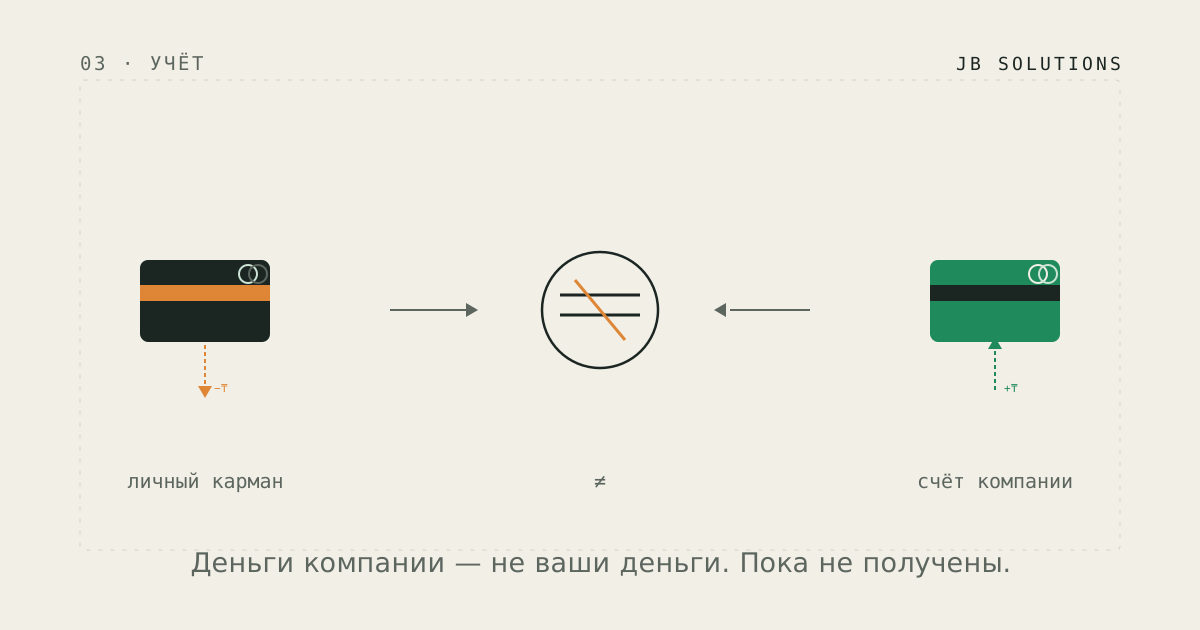
Your company, whether an LLP or a sole proprietorship, is a separate legal entity. It has its own bank account, its own revenue, its own expenses, and its own taxes. As an owner, you receive money from the business in only two ways: through a director's salary or through dividends. Other withdrawals without proper accounting complicate planning, lead to cash gaps, and knock the business off track.
Until you separate yourself from the company, you can't see the real picture: how much the business earns, how much it spends, and how much you actually receive.
How to Tell If You Have a Problem
Answer four questions:
- •Have you ever paid for business expenses from your personal card without officially reimbursing yourself?
- •Has a client ever sent money to you personally rather than to the company account?
- •Have you transferred money from the company account to yourself as soon as you needed it, without notifying your team or formalizing it as salary or dividends?
- •Do you not know exactly how much you earned as an owner over the past three months?
If even one answer is yes, your pockets are mixed.
Where the Losses Come From
The owner subsidizes the business from personal funds. Cash, transfers, 'I'll pay it back.' These amounts are recorded nowhere. The books show a good margin, but it's fiction. The real cost is higher; you just can't see it in the numbers.
The company account is used for personal expenses. The balance looks fine, but during the month you take from the company account for apartment renovations, a car purchase, thinking it's free cash. It's not free cash. It's the company's working capital that you're consuming.
A client paid you personally. The transfer came to your personal card or cash in hand. Convenient, but for the business this income doesn't exist: no entry, no e-invoice, nothing in the report. Actual revenue is understated and the tax base is distorted.
Why Employees Should Handle Payments, Not You
The most common mistake: the owner handles all payments themselves. This breaks the accounting, not because the owner is dishonest, but because they have other priorities.
When the owner pays directly:
- •receipts get lost or aren't taken at all
- •personal card payments get mixed with corporate ones
- •the person responsible for records can't get documents on time: 'busy,' 'later,' 'don't remember'
- •sometimes documents exist but the owner doesn't share details, considering it unnecessary formality
Designate a team member responsible for payments: a financial manager or office manager. This person works strictly by the rules: only from the company account or corporate card, only with documents, only within the approved budget. Agree on the format for recording cash expenses: what gets recorded, how, and how often. The owner approves but doesn't pay.
What to Pay From Which Pocket
| What we pay | From where | Documents |
|---|---|---|
| Suppliers, rent, local contractors | Company bank account | Contract + e-invoice + act |
| Facebook Ads, Google Ads, Claude.ai, Zoom and other foreign services | Owner's personal card | Invoice from the service. No reimbursement: it would create additional taxes on top of the subscription cost. Recorded separately in the management report. |
| Household purchases: paper, water, stationery | Personal funds, reimbursed via expense report | Fiscal receipt with company BIN |
| Owner's personal expenses | Personal card only, from salary or dividends | None |
How Clients Should Pay
Only to the company's bank account. No transfers to a personal card, the owner's Kaspi, or cash in hand. Put this in the contract.
If a client still sends money directly to the owner, the person responsible for payment records must be notified immediately and it must be recorded as a loan from the owner with subsequent offset. Otherwise, for the business, this payment simply doesn't exist.
How to Correctly Take Money Out of the Business
The money in the company account belongs to the company, not to you. Two proper ways to receive your share:
Director's salary. Set yourself a fixed salary at the market rate for a director. This gives you two important figures: what management actually costs the business and how much profit you receive as a shareholder on top of that. When it's time to hire a director to replace you, you'll already know that number.
Dividends. At the end of a period, once all obligations to the tax authorities and suppliers are settled. On a schedule, not 'take it while there's money.'
Everything that comes to your personal card through these two channels is yours. The company account is closed for personal spending.
Where to Start
- 1Today. Determine what you pay through the company account and what through your personal card. Don't mix them.
- 2This week. Designate a person responsible for payments and agree on the expense recording format.
- 3By end of month. Add the company account details to your contract template. The team knows: if a client pays the owner directly, notify the responsible person immediately.
- 4Once a quarter. Set a fixed salary and record dividends after the period closes.
Related service
Management Accounting
Setting up management reporting: P&L, CF, balance sheet, and KPIs